
The DealMaker — French History of St. Louis: Fur Trade, Founders & Gateway to the West (Previous Edition)
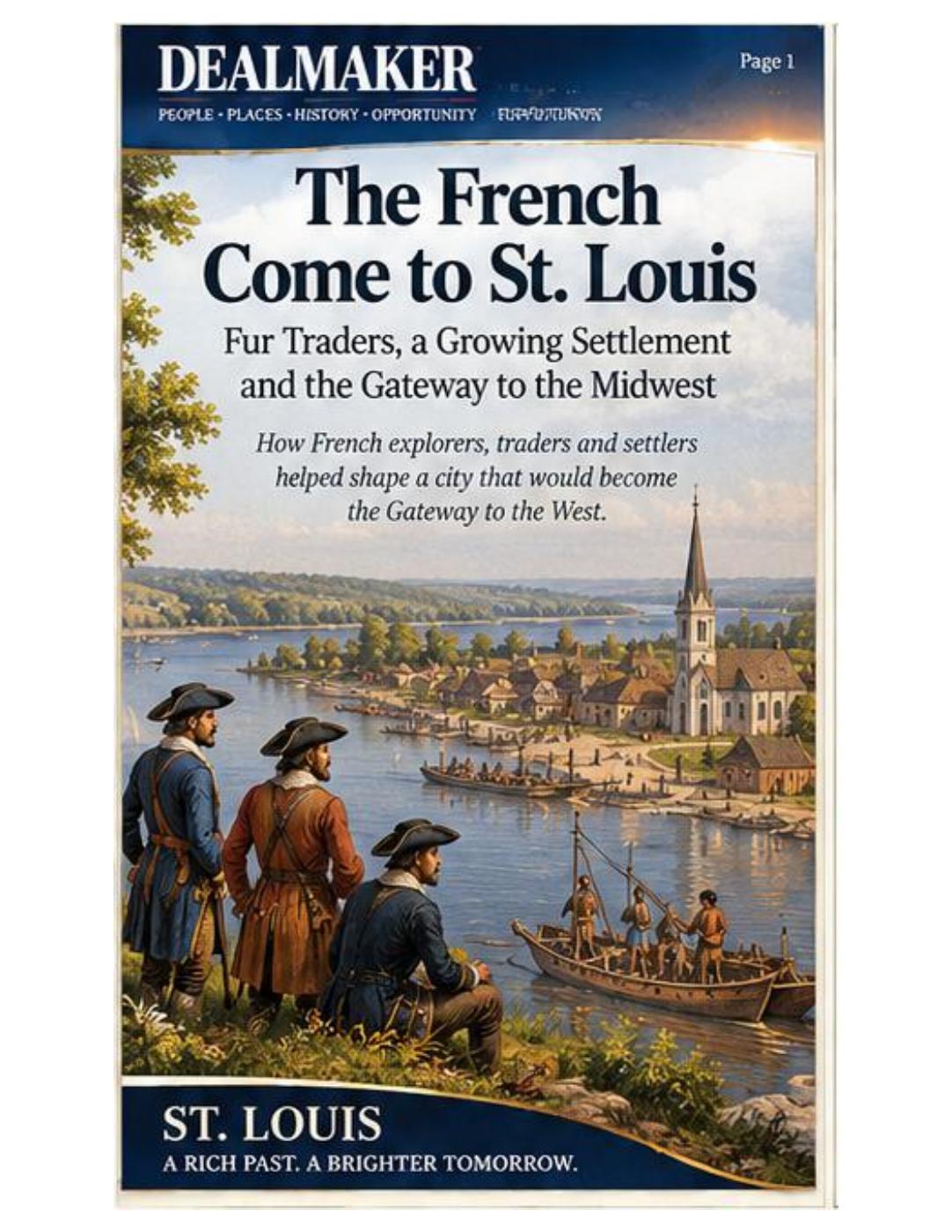
The DealMaker — French History of St. Louis: Fur Trade, Founders & Gateway to the West
St. Louis began as a French river settlement, and that early identity still shapes the city’s story. This previous edition of The DealMaker looks at how a modest trading post founded in 1764 grew into a strategic Mississippi River center tied to commerce, culture, and westward expansion. From its first days, St. Louis was connected to trade routes, frontier diplomacy, and the ambitions of empires.
This issue follows the French roots of St. Louis through its founders, its fur-trade economy, and the transition from colonial rule to the American era. Readers will see how Pierre Laclède and Auguste Chouteau helped establish the settlement, how Native partners were essential to trade networks, and how the Louisiana Purchase helped position St. Louis as the enduring Gateway to the West.
What's Inside This Edition
- A look at the 1764 founding of St. Louis by Pierre Laclède and Auguste Chouteau, and why the site near the Mississippi River mattered for trade and growth.
- An overview of the fur trade that powered the early settlement, including river routes, trading houses, and the importance of Native partnerships in the regional economy.
- A tour through the French imprint still visible in St. Louis, from street names and church history to architectural traces that connect the present city to its colonial past.
- Clear context on the shift between French and Spanish rule in Upper Louisiana, showing how government changed while French culture remained deeply rooted in everyday life.
- The story of the Louisiana Purchase and the role of St. Louis as a launch point for national expansion, including its connection to the departure of Lewis and Clark.
French Roots, River Trade, and a Growing Frontier City
Before it became part of the United States, St. Louis stood within a colonial world shaped by France and Spain. Founded after French control east of the Mississippi changed following the Seven Years' War, the settlement emerged on the west bank as a practical and promising trading location. Pierre Laclède recognized the advantages of the site, and Auguste Chouteau is traditionally credited with helping lay out the village. In its early years, St. Louis developed as a commercial place first, built around exchange, transport, and access to interior waterways.
The fur trade was central to that growth. Traders moved goods along the Mississippi and Missouri systems, connecting St. Louis to a much wider continental network. Native nations were not a side note to this economy; they were vital trading partners whose knowledge, relationships, and participation made the business possible. Over time, the city’s French language, Catholic institutions, and place names left a durable mark. When the Louisiana Purchase reshaped the map in 1803, St. Louis was already positioned to become a key outfitting and departure point for movement into the West, including the Lewis and Clark expedition.
Who This Edition Is For
This edition is for local history fans, students, tourists, educators, genealogy researchers, and anyone curious about how St. Louis developed from a French colonial outpost into a major American river city. It is especially useful for readers who want a concise introduction to the founding of St. Louis, the fur trade, and the events that earned it the nickname Gateway to the West.
Read the Full Edition Free
Never Miss an Issue
Visit Amerishop.biz to explore more local features from The DealMaker and create a free reader account to keep up with new issues and community-focused digital content.
Published by Amerishop Services LLC — bringing deals and community together since 2003.
Rob the Bad Dealers. Join the Dealer-Free Revolution.
Ready to stop the racket? Talk to a real local expert today.