
The DealMaker — Boonville Missouri History: Cooper County, the Missouri River & the Santa Fe Trail (Previous Edition)
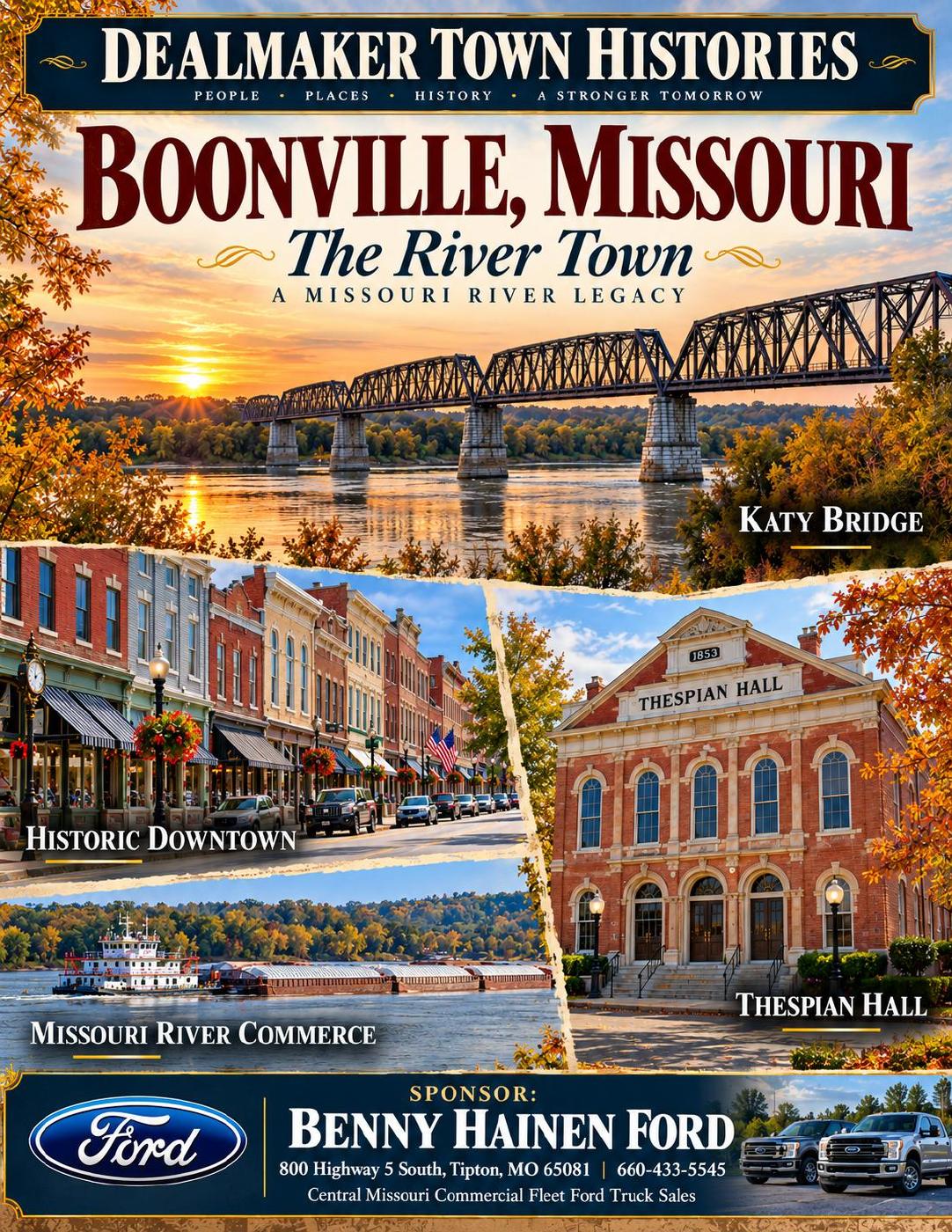
The DealMaker — Boonville Missouri History: Cooper County, the Missouri River & the Santa Fe Trail
Boonville, Missouri sits at a crossroads of western migration, river commerce, and local memory. This previous edition of The DealMaker looks beyond quick facts to explore how the Boone's Lick country helped pull settlers into central Missouri, how the Missouri River shaped daily life, and how Boonville became connected to trade routes reaching far beyond Cooper County.
Readers will find a practical, place-based look at the forces that made Boonville important in the early 1800s and why that history still matters. From the salt springs that attracted pioneers to the steamboat era and the Santa Fe Trail trade, this edition connects major regional history with the families, landmarks, and landscape that still define Boonville, Missouri today.
What's Inside This Edition
- A closer look at the Boone's Lick country, where valuable salt springs drew early settlers and helped open a path westward into Missouri.
- Stories from the Missouri River landing, including the steamboat era that linked Boonville to trade, travel, and news from across the region.
- An overview of Boonville and the Santa Fe Trail trade, showing how the town served as a useful outfitting and departure area for westbound movement.
- Highlights from Cooper County history that focus on the people who built farms, businesses, and neighborhoods instead of simply passing through.
- Ideas for connecting the past to the present through landmarks and historic places you can still visit around Boonville and Cooper County.
History and Context
The story of Boonville begins with geography and necessity. The nearby Boone's Lick salt springs became a major attraction in the early settlement period because salt was essential for preserving food and supporting frontier life. As families moved into the region, trails, roads, and trading patterns followed. The Boone's Lick Road became one of the best-known routes for migrants heading west, and central Missouri developed into an important staging area for broader movement across the frontier. In that setting, Boonville, Missouri grew as part of a larger network of settlement tied to land, water, and opportunity.
The Missouri River then gave Boonville another layer of importance. River traffic connected the town to markets and migration streams long before modern highways. During the steamboat era, landings along the river brought goods, people, and information into town and carried local products outward. Boonville also gained recognition as a jumping-off point associated with Santa Fe Trail commerce, linking local business to trade headed toward the Southwest. While some travelers moved on, many Cooper County families stayed, worked the land, built institutions, and left behind the historic character visitors can still sense today. That blend of movement and permanence is what makes Boonville history so compelling.
Who This Edition Is For
This edition is for local history readers, Missouri travelers, teachers, students, genealogy enthusiasts, and anyone curious about how Boonville, Missouri helped connect the Boone's Lick frontier, the Missouri River economy, and westward trade. It is also a strong fit for residents of Cooper County who want a deeper appreciation of the places they pass every day and for visitors planning a heritage-focused stop in Boonville.
Read the Full Edition Free
Never Miss an Issue
Visit Amerishop.biz to explore more local editions and create a free reader account so you never miss a new issue of The DealMaker.
Published by Amerishop Services LLC — bringing deals and community together since 2003.
Rob the Bad Dealers. Join the Dealer-Free Revolution.
Ready to stop the racket? Talk to a real local expert today.